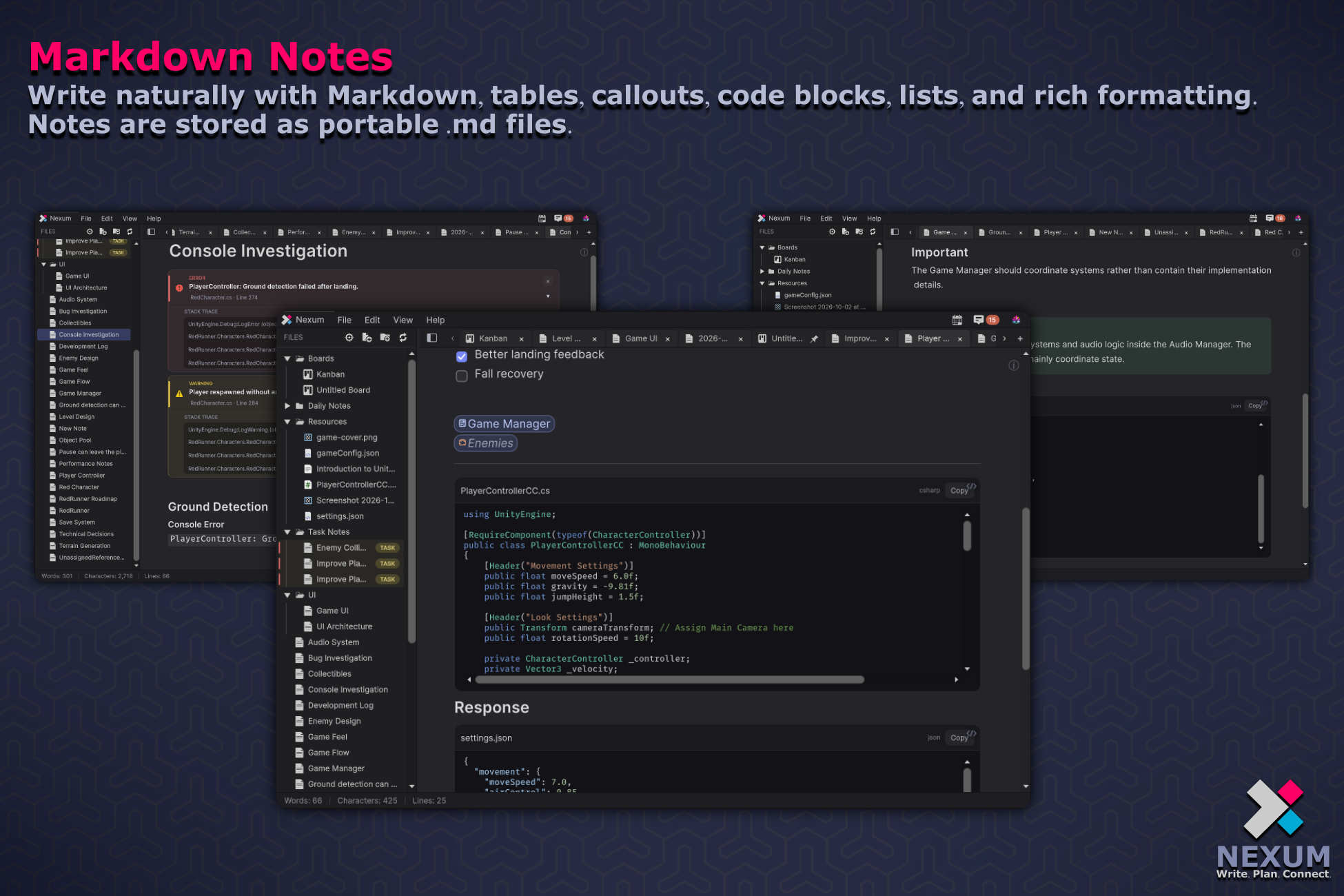
Write
A live Markdown surface with wiki links, callouts, highlights, and syntax-aware code, without leaving the Editor.

Write. Plan. Connect.
A connected Unity development workspace that lives inside the Editor. Notes, project context, and work stay linked — so the next time you return to a problem, the context is still there.
Watch
Start with the full demo, then step into notes, Kanban, and annotations. The clip you pick plays here, with the story of that surface underneath.
Overview
1 / 4
Notes, Kanban, Unity references, and the files around them share one Editor window. Open a problem again later and the context is still there.
Unity work produces more than code. Decisions, Prefabs you keep revisiting, TODOs buried in scripts, console errors you already swore you fixed. Those pieces usually scatter. Nexum keeps them together.
A live Markdown surface with wiki links, callouts, highlights, and syntax-aware code, without leaving the Editor.
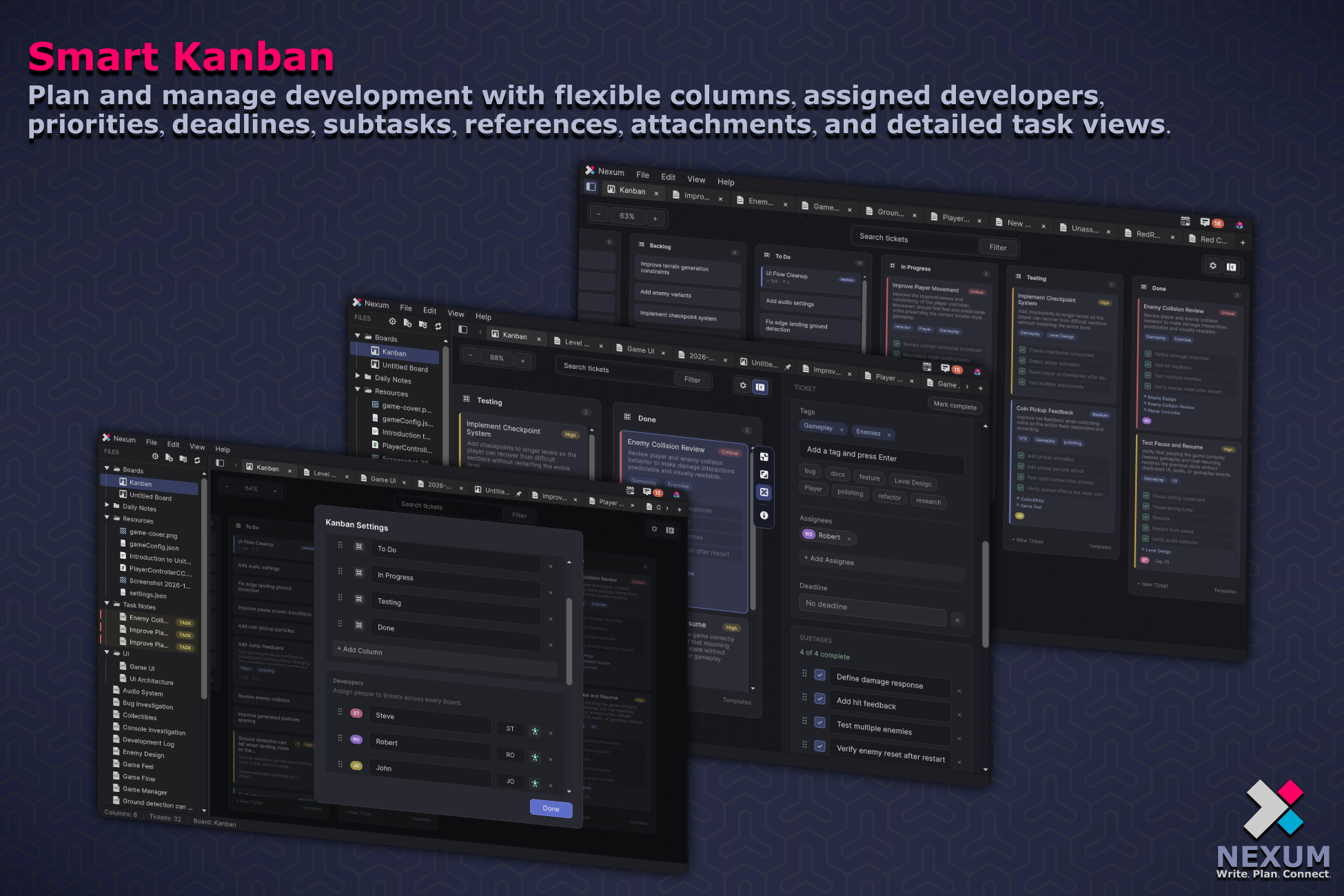
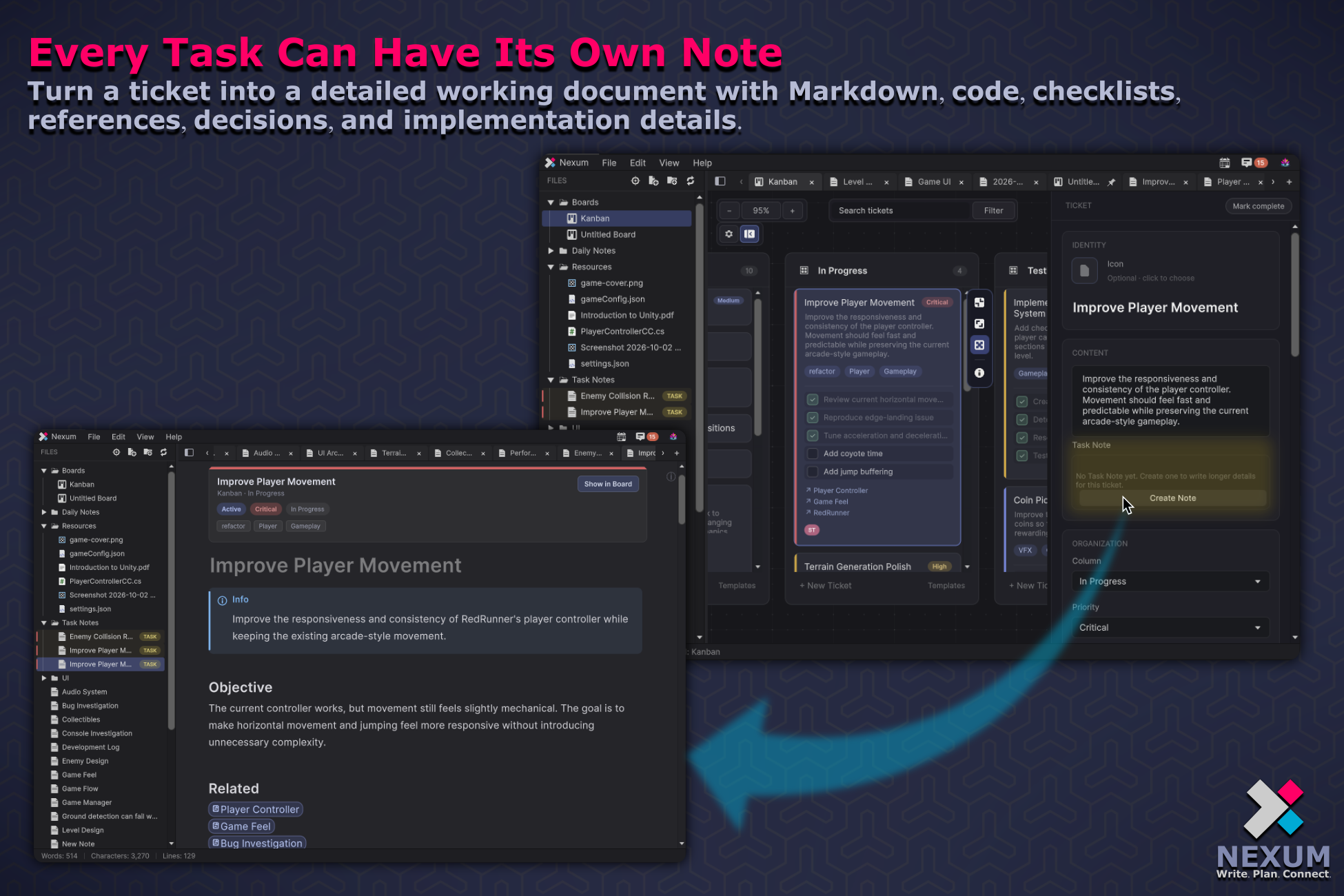
Kanban boards, task notes, annotations, and daily journals turn ideas into work you can actually return to.
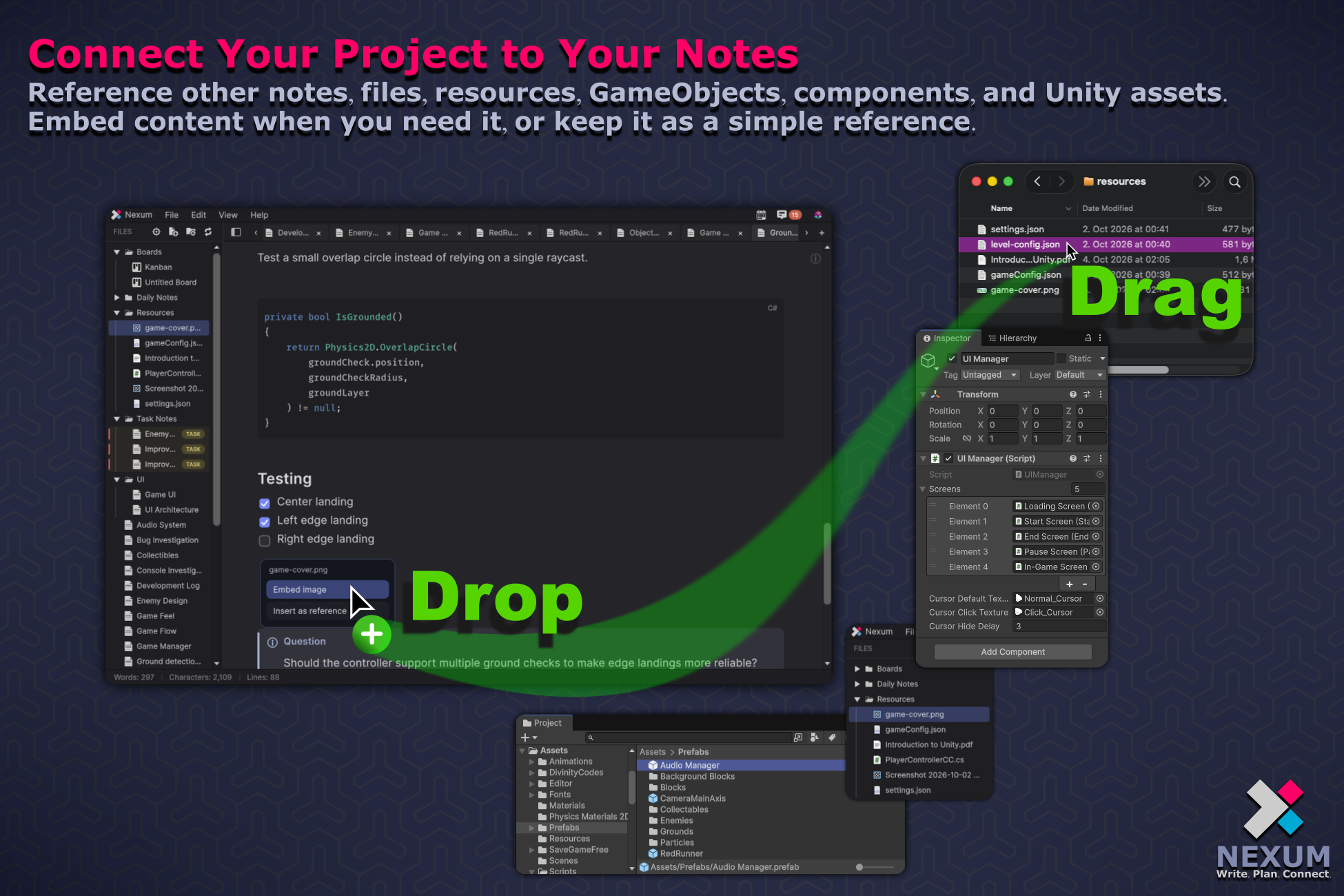
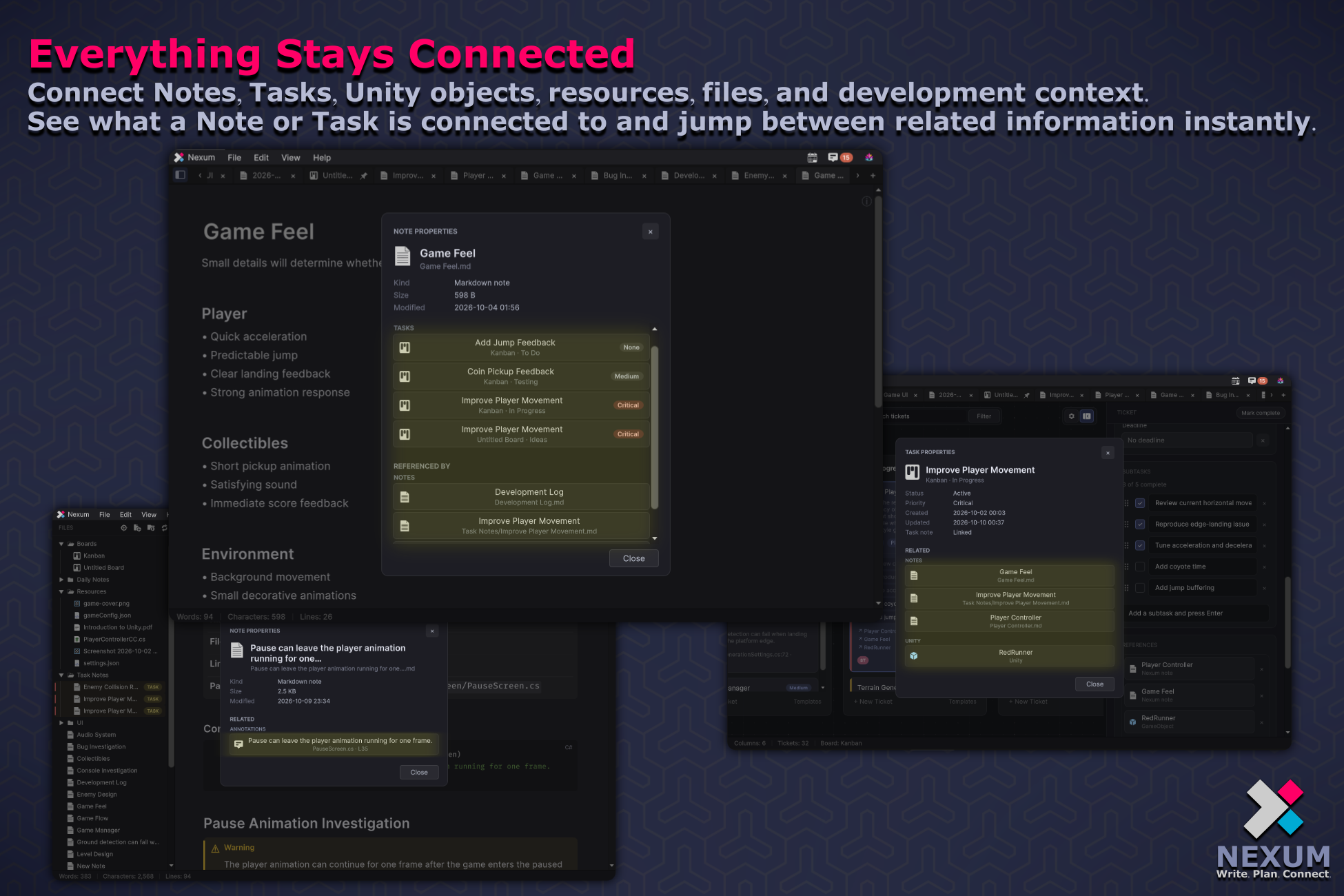
Prefabs, resources, tickets, and notes reference each other. Properties shows the graph. Context survives the weekend.
Surfaces
Step through the workspace. Arrows, thumbnails, or a swipe move you from one surface to the next.
1 / 8
The idea
Those pieces usually scatter across sticky notes, chats, tickets, and half-remembered console logs. Nexum keeps them in one workspace and lets them reference each other.
Decisions and investigations
Prefabs, components, and assets you keep revisiting
Console errors you swear you already fixed
TODOs buried in scripts
Tasks that start as a sentence and grow into a project
How the pieces connect
A note can mention a Prefab. That Prefab can sit on a ticket. That ticket can own a Task Note. Annotations can jump you to source. Console captures keep the stack trace next to the investigation. That chain is the product.
A hunch, a bug, a decision
Unity objects, resources, and other notes attach here
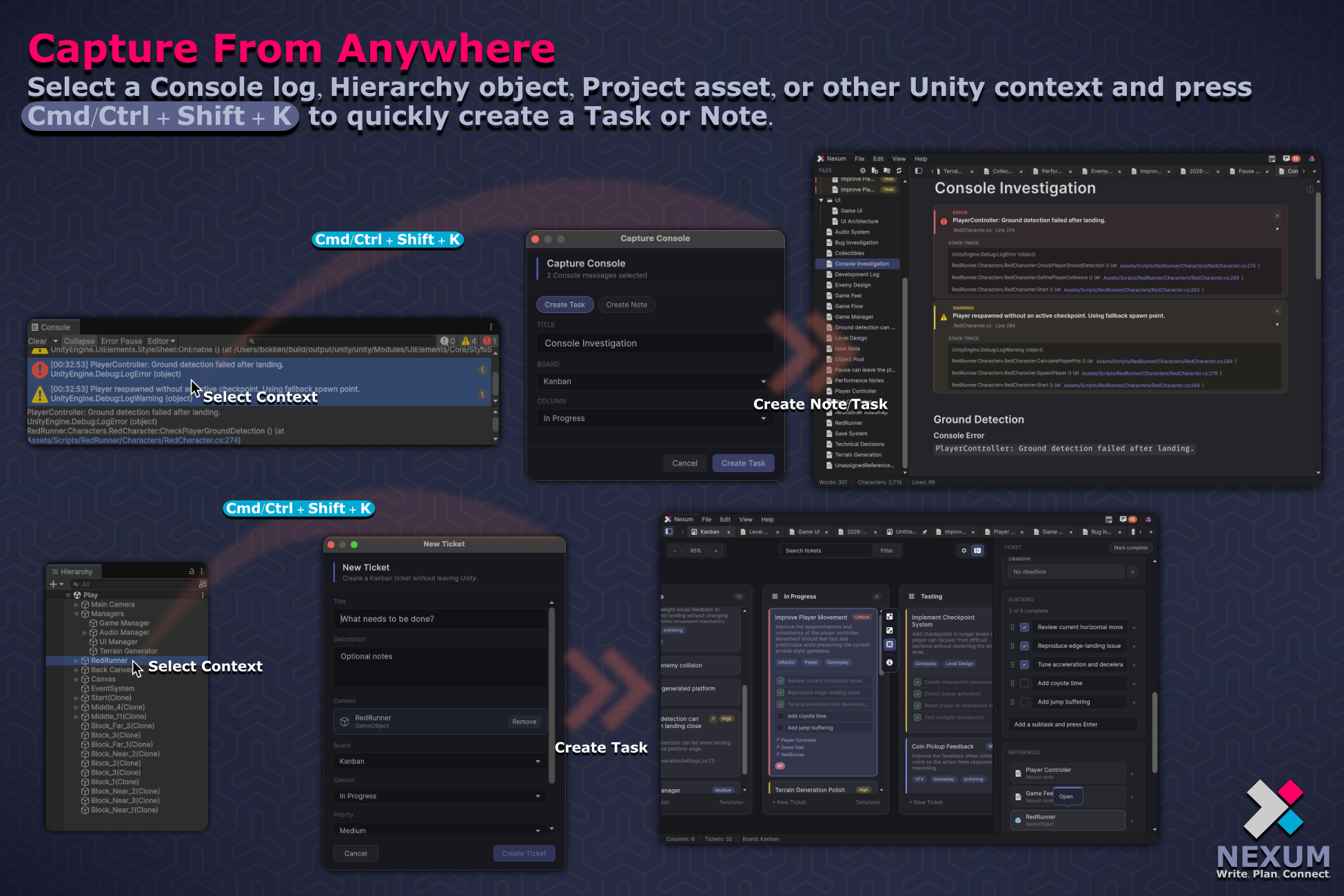
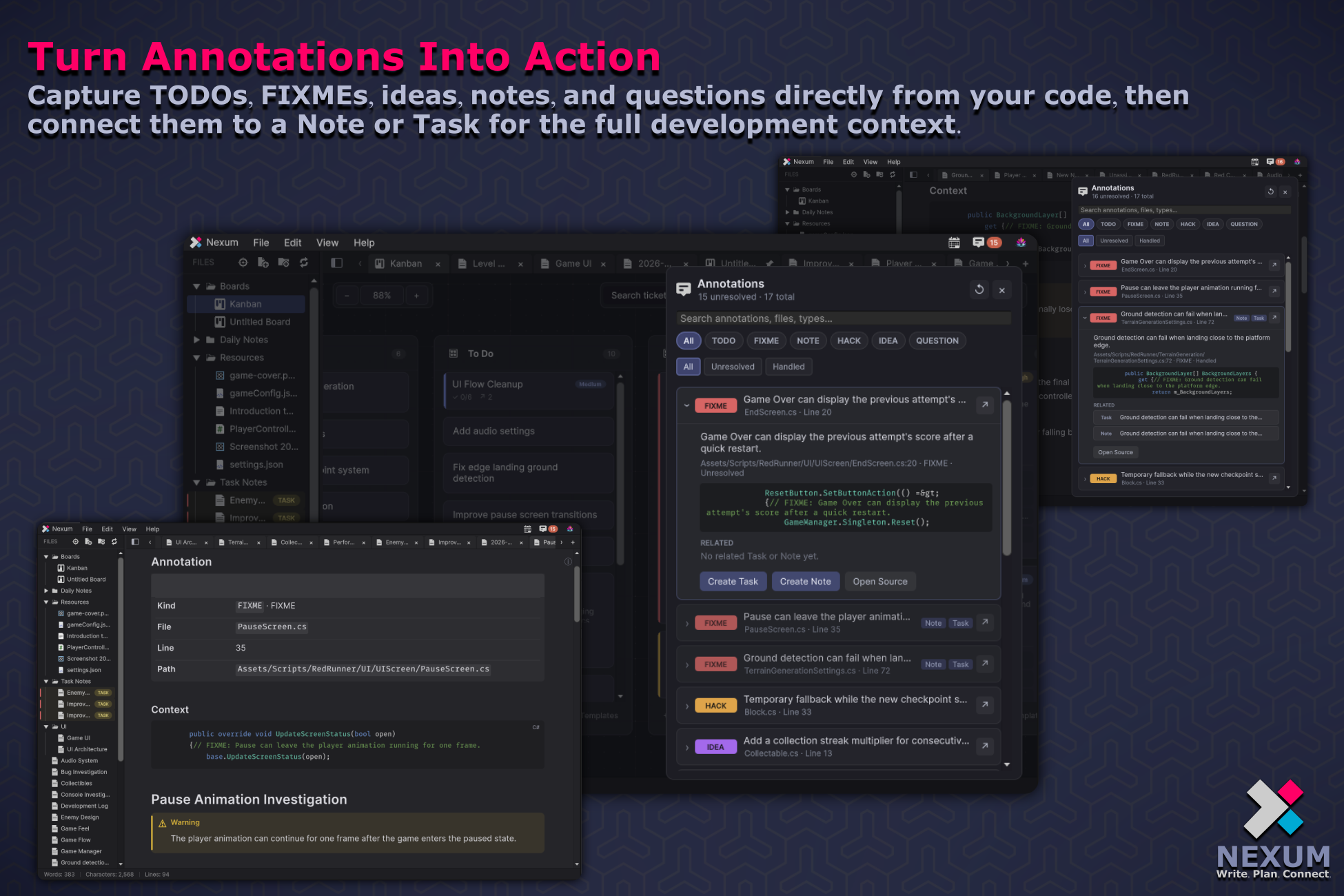
TODOs from scripts and captured Console rows
Work with priority, deadline, and context
The deep write-up owned by that ticket
The workspace
It is not only a Markdown editor, and not only a Kanban board. Writing, project context, and work stay in one place.
Markdown writing surface for ideas, docs, and investigations — without leaving the Unity Editor.
Keep Prefabs, GameObjects, components, and assets attached to the writing so context stays clickable.
Images, audio, video, PDFs, and text/code files stored with your notes.
Turn work into columns, tickets, priorities, and deadlines that still carry project context.
Dedicated notes owned by a ticket when a card needs a full write-up.
Discover TODO, FIXME, and related markers in project scripts, then jump to source.
Capture selected Unity Console rows into a note or ticket, stack trace included.
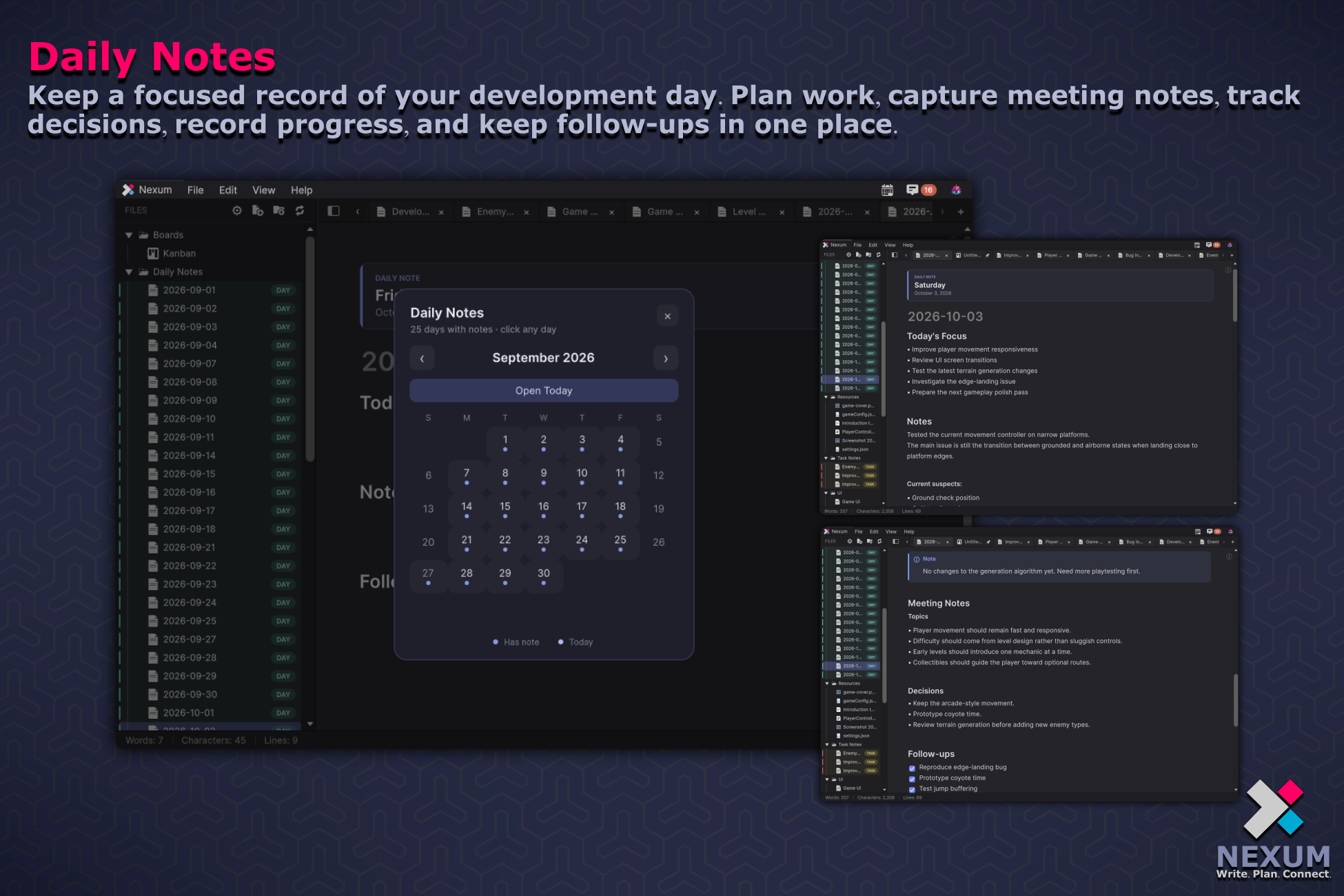
Dated notes for what you worked on and decided today.
See and navigate what a note or ticket is linked to.
Who it is for
Nexum fits people who live in Unity and want development memory that does not evaporate. It does not replace your entire project-management stack. It gives you a fast, local, Unity-native place for the reasoning around the work.
Write, plan, and connect inside Unity so the next time you return to a problem, the reasoning is still there.